
Home / History
History of All Saints Church Toftrees
Our church has a long and fascinating history, shaped by centuries of worship, community, and tradition.
A Church Dating Back to 1086
Originating in Saxon times and rebuilt after the Norman Conquest, our church reflects centuries of history, with features and traditions shaped by generations of worship and community life.
The rebuilt church incorporated both materials from an earlier church and also some Roman tiles, no doubt picked up from the field opposite, where there had been a building in the days when a Roman road went past the church site.
About The Church
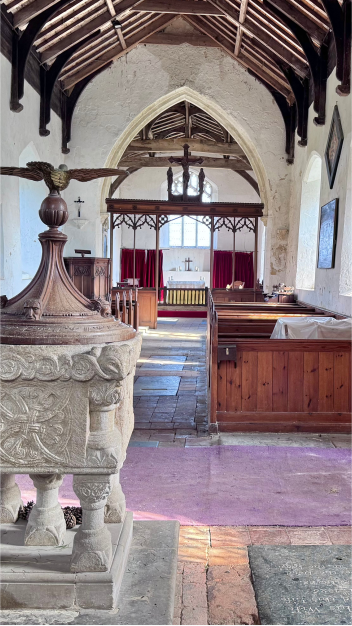
It was during Norman times that the church acquired its stone font. The master carver who created our famous font is believed to have carved four fonts in Norfolk, of which our Toftrees font has been described as the finest Norman font in Europe.
Many of the memorials listed on this website commemorate people who were baptised in the font. Originally, it would have been filled with water at Easter, blessed, and the same water used for baptisms until the following Lent.
There was once an Elizabethan manor house at Toftrees, but unfortunately it later became derelict and was demolished in 1958.
Most of the land around the church is now owned by Raynham Estates, and Lord Townshend is a patron of the church, meaning he has a role in appointing the vicar. He is also the Lay Rector - an ancient role by which the owners of certain lands, originally church glebe, remain responsible to this day for the cost of repairs to the church chancel.
Fortunately, the church escaped the Victorian "renovations" that spoilt so many other churches, so the building we worship in today remains much as it was when it was first constructed centuries ago. We still have, for example, the unusual "priest's door" which allowed people such as lepers, who could not enter the church, to still see the altar during services.
In the 17th century, the church was presented with the Toftrees Cup, a solid silver chalice made in Norwich, by the family of the then-owner of the manor house. It is still used at some Holy Communion services, although security concerns mean it is kept safely stored away from the church.
The bell in the church tower is still rung on special occasions, such as the King's Coronation.
The wooden altar rails (sometimes known as dog rails) date from the mid-17th century, when Archbishop Laud ordered that all churches install rails to prevent dogs and others from approaching the altar. Our altar rails still survive to this day.
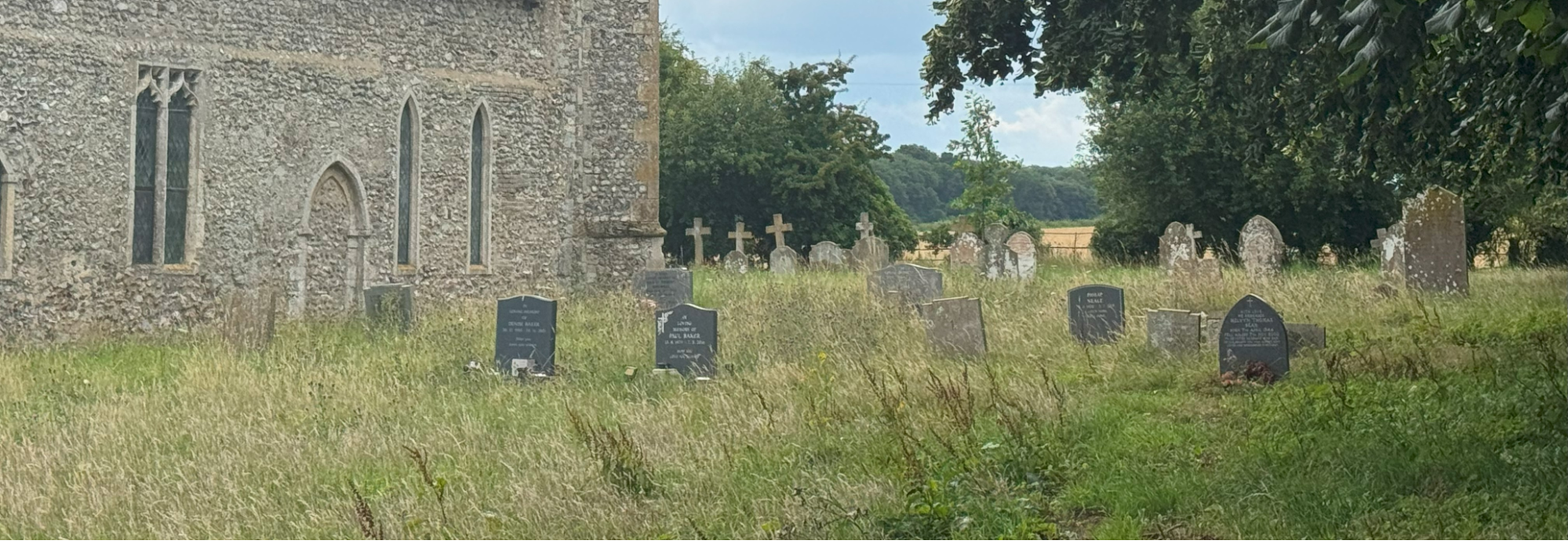
Toftrees Church Norfolk has an extensive number of rural churches over 650 many of which are in disrepair or falling into disrepair. Toftrees Church is an example of this, Toftrees church experienced issues with damp causing plaster to fall off the building and was placed on the Heritage Register.
