
Burial Details
Please see below for the details on TUBBY, William Arthur.
Buried Date
30th September 1916
GRO Record
Q4 1916 Walsall 6b 364
Notes
Ref: Not recorded. Died at 4 months of age.
Other People Buried in this Grave
Inscription
William Arthur TUBBY Born June 4th 1916 Died Sept 30th 1916 In Loving Memory of Jesus called ----- child unto him.
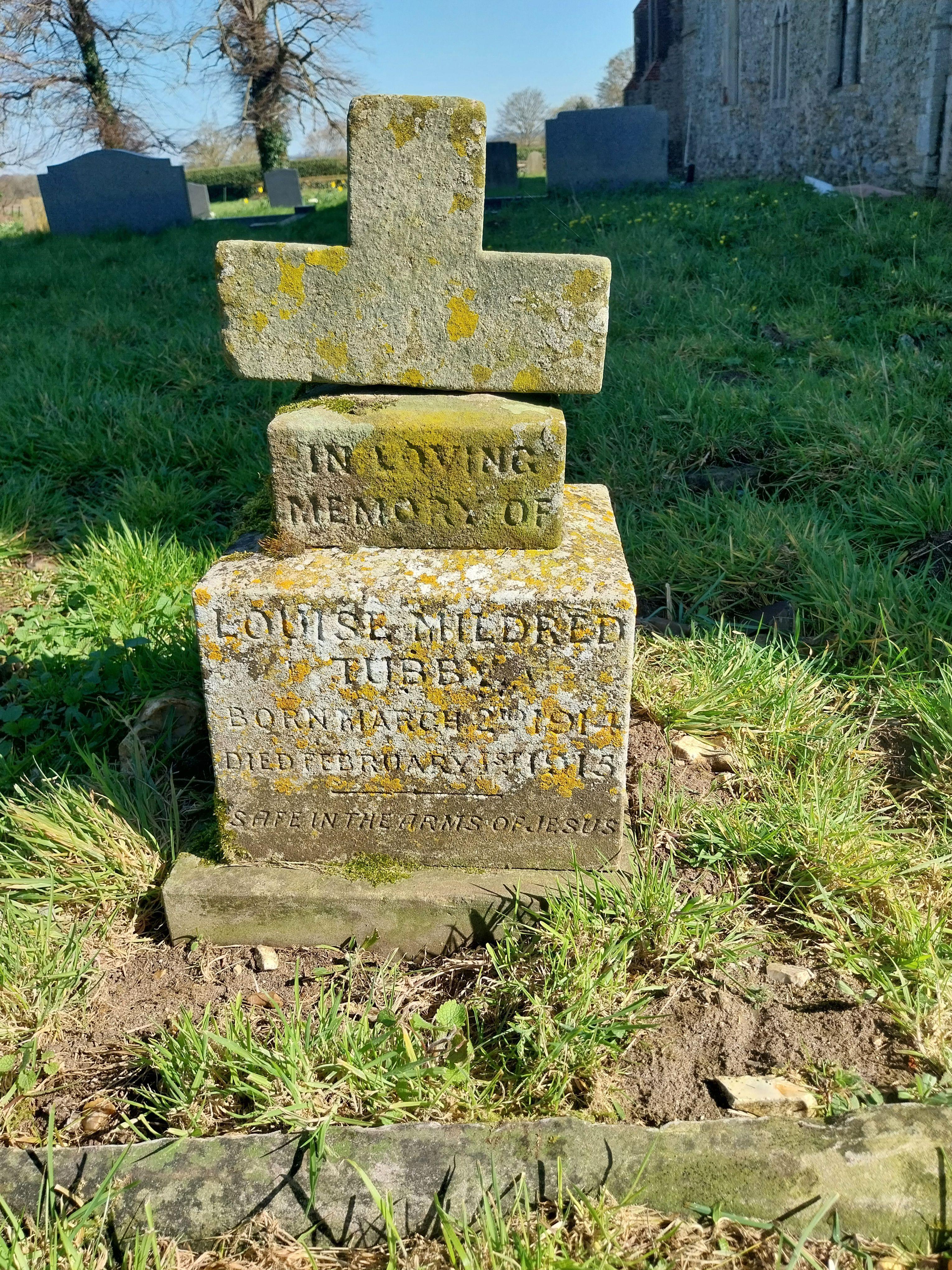
In Loving Memory of Louisa Mildred TUBBY Born ---- 1915 Died ---- Sleeping in the Arms of Jesus
Grave Details
Location
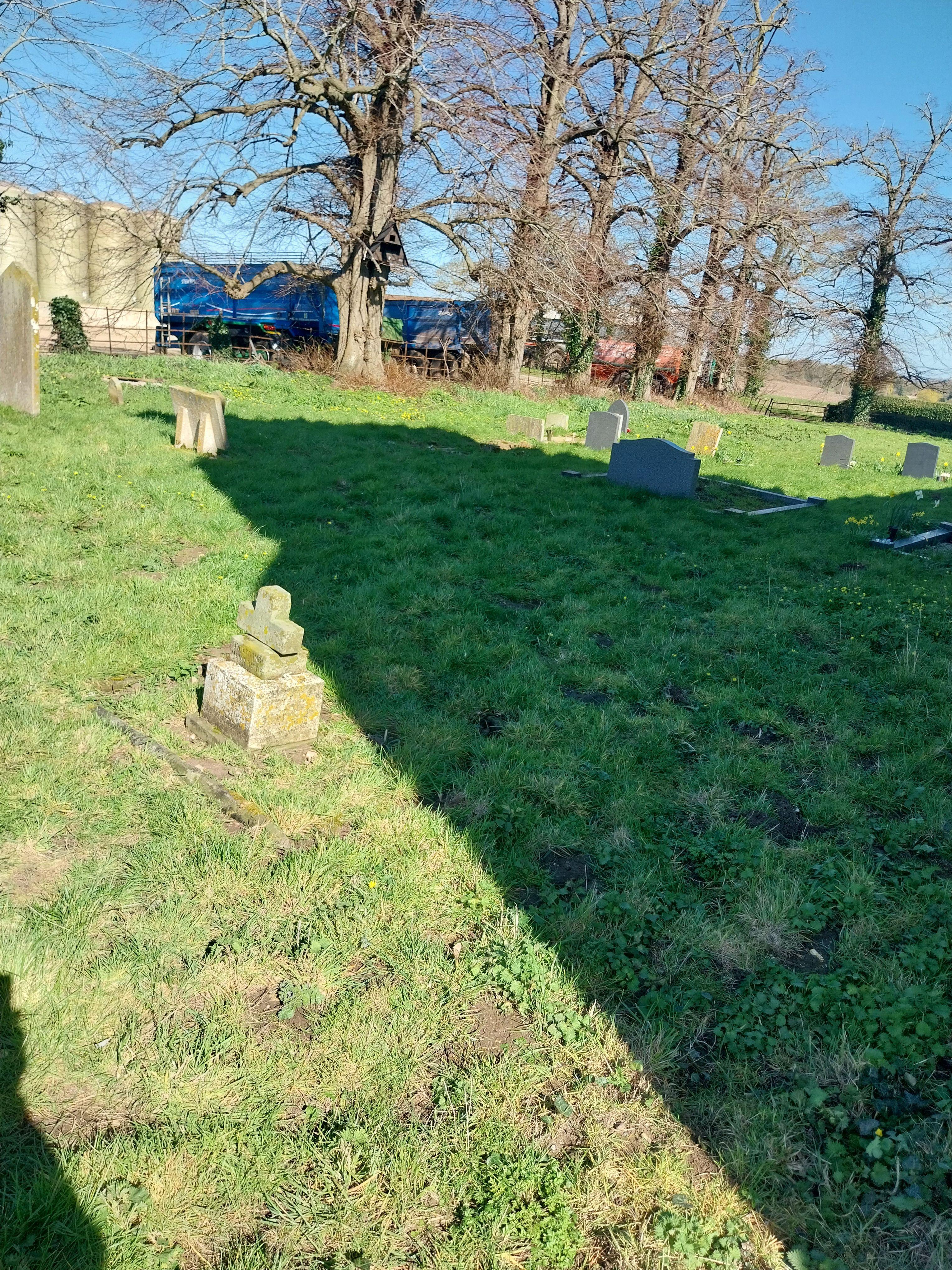
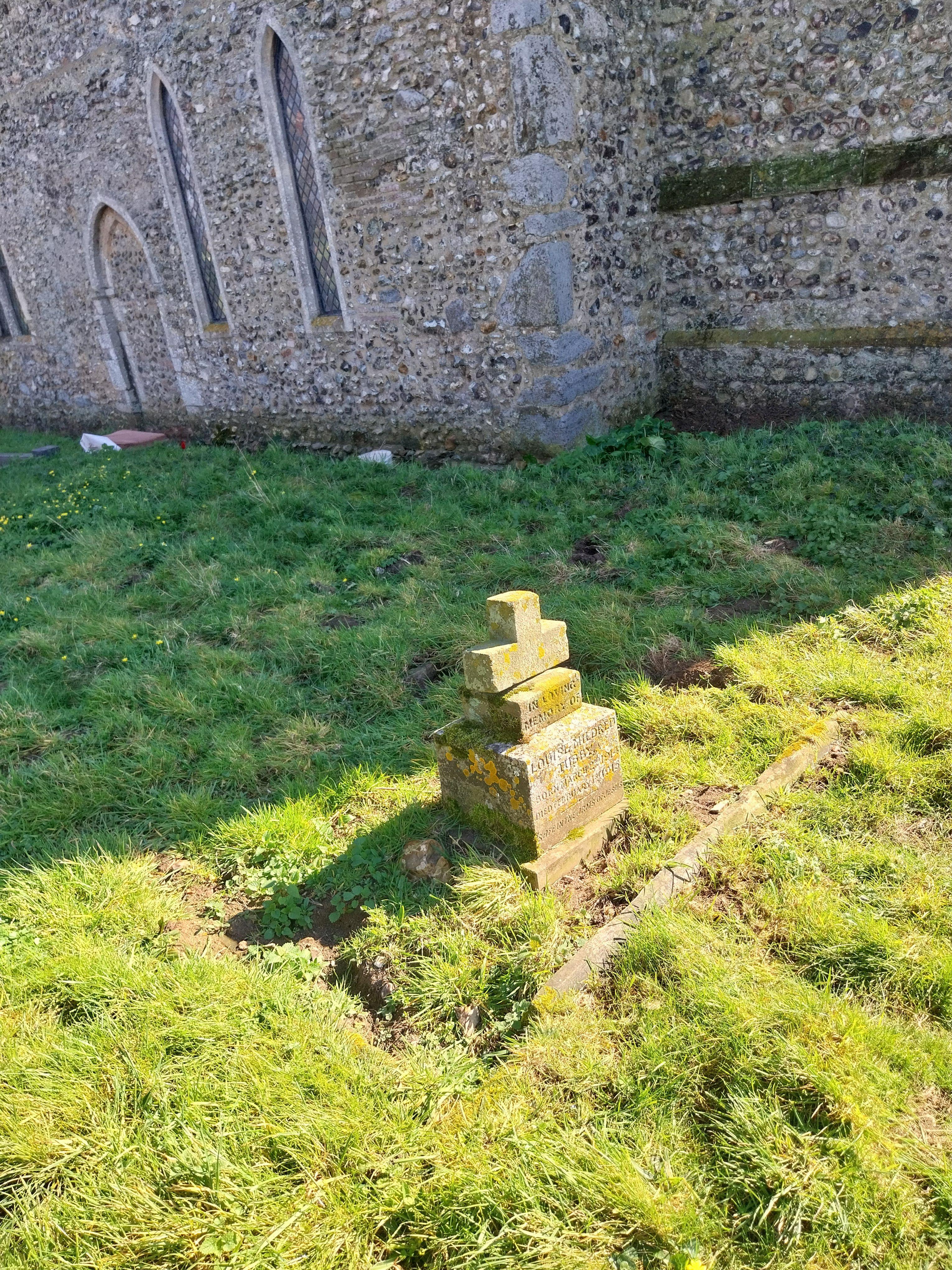
Located beside the church tower on the northern boundary side.
Headstone Condition
The headstone cross is broken. The headstone inscription is partially readable.
FootStone
No
Type of Grave
upright
Additional Information
A double plinth: A two-tier cake-shaped plinth with inscriptions on two sides.

Understanding Our Records
GRO refers to the General Records Office records of deaths. So Q is the quarter of the year when the death occurred, followed by the year of birth. Then comes the local government area where the death was registered, followed by the volume number, and sometimes the letter of an additional volume, of their records, and finally the page where it is recorded.
REF refers to the parish Burial Register. First there is the year of the death, then the page number, and finally the entry number.
Deaths after 1999 may not yet have a GRO or Parish Register entry recorded on the website.
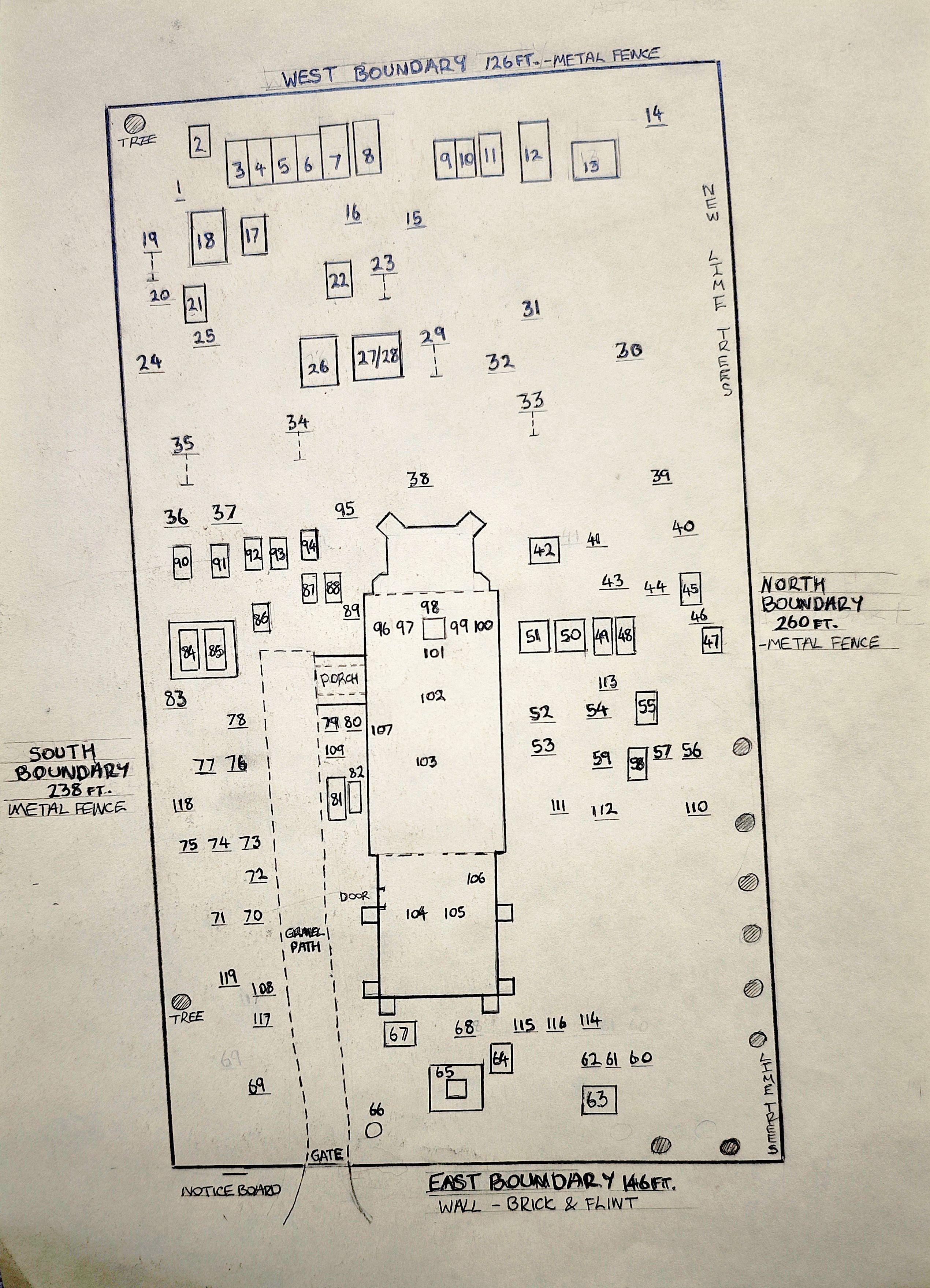
A portion of the interactive churchyard map is shown for context, although you can also view the whole churchyard by clicking on the Map button at the top of the page. This is especially useful if you find that there are more than one person buried in our churchyard with the name you are searching for.
We are always mindful that there are many people buried in our churchyard that do not have a memorial, and so are not included in this list. We remember all of them in our prayers.
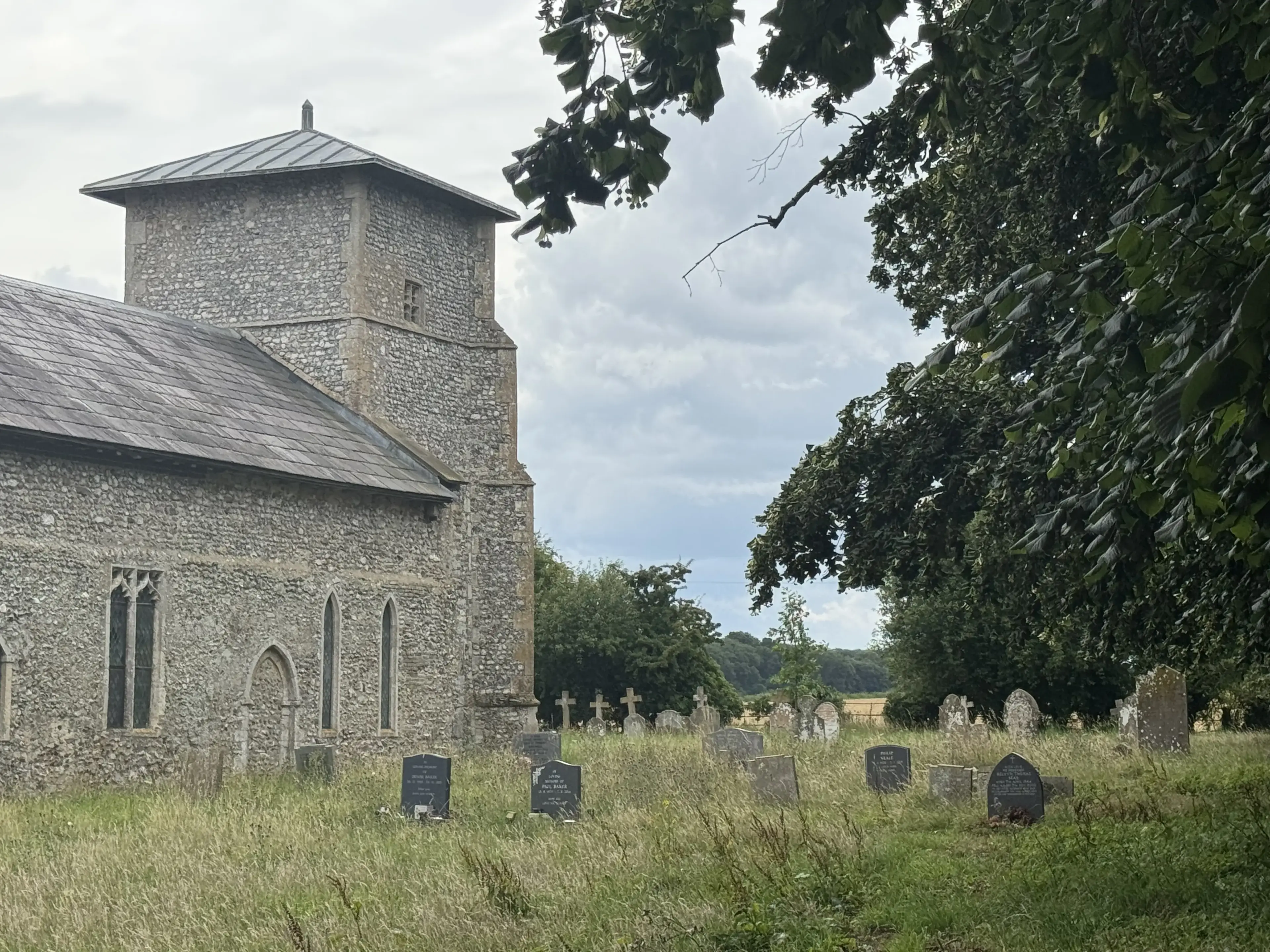
There has been a church on this site since Saxon times. Shortly after the Norman invasion the church was rebuilt, incorporating both materials from an earlier church and also some Roman tiles no doubt picked up from the field opposite, where there had been a building in the days when a Roman road went past the church site.
